0086-150-37964-999
furniture@lyeton.com


As global food systems face escalating land constraints, climate volatility, and urbanization, Controlled Environment Agriculture has emerged as a cornerstone of modern food security and high-value crop production. However, operating indoor vertical farms and automated greenhouses presents a formidable economic challenge: high capital expenditure per square foot of real estate. To achieve long-term profitability, commercial growers must squeeze maximum biological output from every cubic meter of facility space.
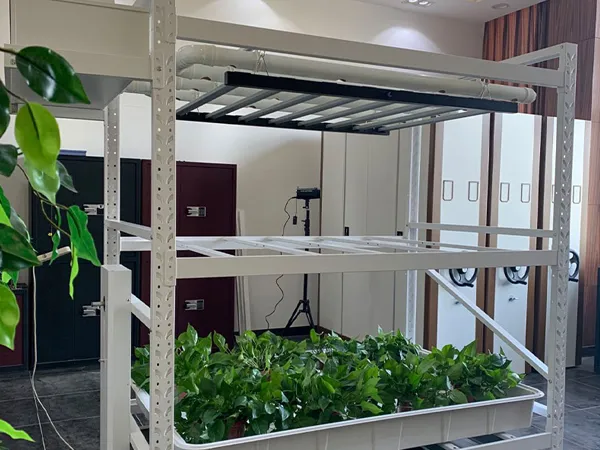
Traditional static shelving systems inherently compromise facility efficiency by dedicating up to 50% of available floor space to permanent maintenance aisles. High-density mobile grow racks solve this spatial bottleneck. By mounting multi-tier shelving units on heavy-duty carriage tracks, growers can eliminate redundant aisles, dramatically expand canopy footprint, and streamline daily operational workflows.
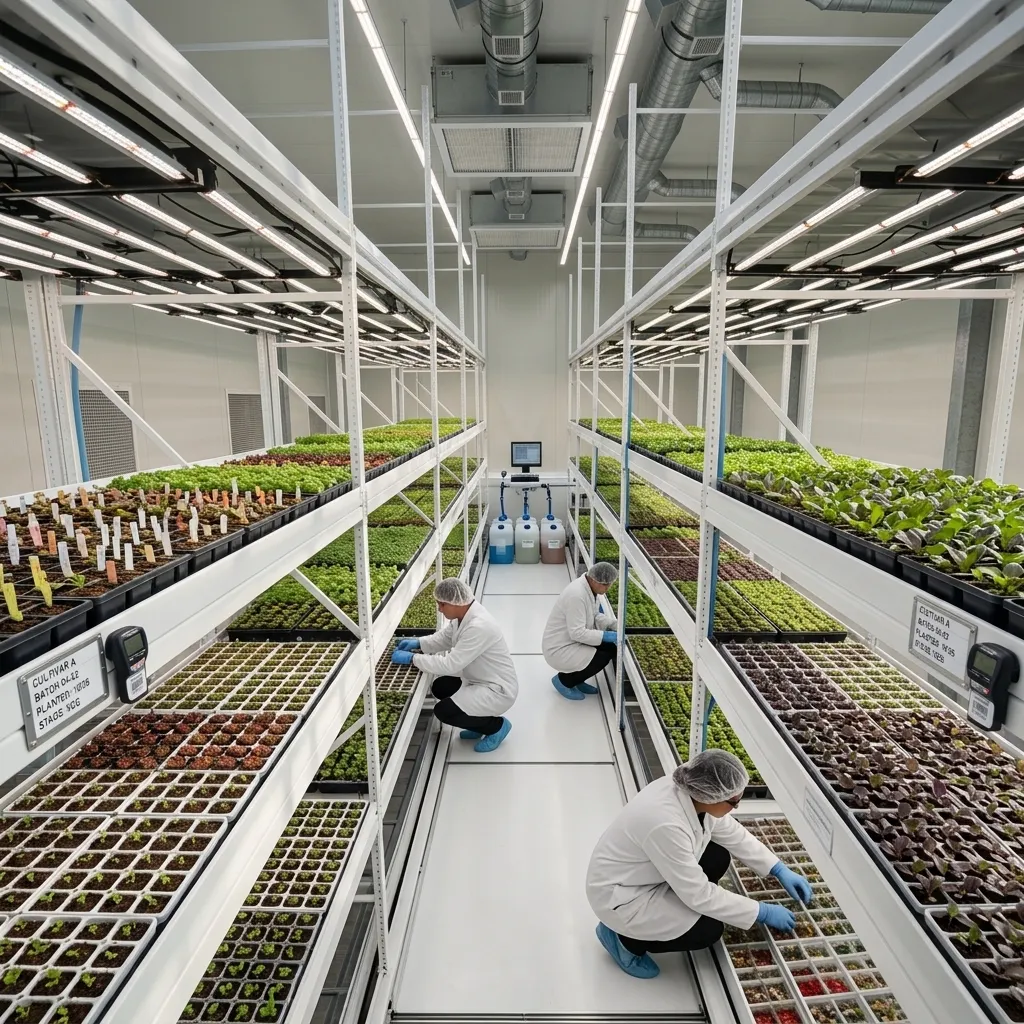
This comprehensive guide explores the engineering principles, microclimate considerations, utility integration, and financial benefits of modern mobile grow rack systems designed specifically for commercial CEA facilities.
1. The Geometry of Efficiency: Eliminating Static Aisles
In traditional indoor cultivation facilities, rows of fixed shelving require dedicated walk aisles between every single rack array to allow personnel to prune, inspect, and harvest crops. Consequently, half of the facility's climate-controlled environment is spent conditioning unoccupied air space rather than growing crops.
Mobile grow rack systems eliminate static aisles by mounting multi-tier rack arrays onto steel tracks embedded directly into or anchored onto the concrete slab. Operators use smooth mechanical-assist hand wheels or automated electric drives to move entire rack banks laterally, opening a single movable aisle wherever access is required.
Footprint & Canopy Utilization Comparison
The spatial transformation achieved by transitioning from static to mobile cultivation systems is substantial, as illustrated in the comparative analysis below.
|
Efficiency Metric |
Static Shelving Array |
High-Density Mobile Growing System |
Performance Impact |
|
Floor Space Dedicated to Aisles |
45% – 50% |
10% – 15% |
70% reduction in wasted floor space |
|
Effective Canopy Coverage |
50% – 55% |
85% – 90% |
Up to 50%+ increase in usable plant canopy |
|
Cubic Volume Utilization |
Moderate (Single or Dual-Tier) |
Maximum (Multi-Tier Vertical Stacking) |
Multiplies vertical growing zones |
|
HVAC & Lighting Energy Efficiency |
Low (Conditioning empty aisles) |
High (Concentrated canopy microclimate) |
Higher yield per kilowatt-hour (kWh) |
By consolidating multiple aisles into a single floating aisle, commercial operations can instantly expand their active cultivation area within the exact same building envelope. For a 10,000-square-foot facility, this spatial optimization can yield an additional 3,500 to 4,000 square feet of productive plant canopy without expanding the real estate footprint or increasing structural lease costs.
2. Engineering for Extremes:
Unlike standard industrial warehouse racking, commercial grow racks operate under aggressive environmental conditions. High relative humidity daily fertigation cycles, chemical sanitation routines, and heavy dynamic loads demand specialized structural engineering.
A mature cultivation canopy, saturated grow media, plumbing, and high-intensity LED lighting fixtures exert immense weight on shelf structures. Industrial-grade mobile racks utilize heavy-duty cold-rolled steel framing. This structural capacity prevents shelf sagging, maintaining precise level alignment essential for automated ebb-and-flow hydroponic trays and uniform drainage.
3. Optimizing the Microclimate: Airflow, Transpiration, and VPD Control
Density without adequate airflow creates microclimate disasters. When plant canopies are stacked vertically in high-density mobile arrays, foliage blocks natural air movement. This leads to localized humidity spikes, stagnant air pockets, and uneven Vapor Pressure Deficit (VPD) gradients across lower tiers.
Left unaddressed, high microclimate humidity triggers severe plant health risks, including Botrytis cinerea, powdery mildew, and calcium uptake deficiencies leading to tip burn.
—Integrated Airflow Solutions
To maintain optimal environmental uniformity across multi-tier mobile systems, leading operations integrate specialized air distribution systems directly into the rack framing:
Under-Shelf Vertical Ducting: Custom ducting mounts flush beneath each shelf, pushing low-velocity, filtered air upward through the plant canopy to disrupt the boundary layer on leaf surfaces.
In-Aisle Circulation Fans: Compact, low-noise inline fans installed at rack ends prevent heat accumulation from LED driver units.
Mobile grow racks represent a fundamental paradigm shift in Controlled Environment Agriculture. By transforming static floor space into a dynamic, highly dense cultivation engine, commercial operators can maximize yield per square foot, protect crop health through integrated microclimate controls, and dramatically shorten their path to facility profitability.
As competition intensifies across global CEA markets, spatial efficiency is no longer an optional upgrade—it is a core prerequisite for long-term commercial viability.
Are you planning to scale your indoor farm or optimize an existing cultivation footprint? Contact our commercial agricultural engineering team today for a custom 3D spatial layout