0086-150-37964-999
furniture@lyeton.com


In modern indoor farming, commercial greenhouses, and high-humidity cultivation facilities, selecting the right growing racks is a critical decision that impacts crop yield, biosecurity, and long-term equipment durability. Facing a wide variety of shelving options, growers and facility managers should evaluate systems based on three key pillars: corrosi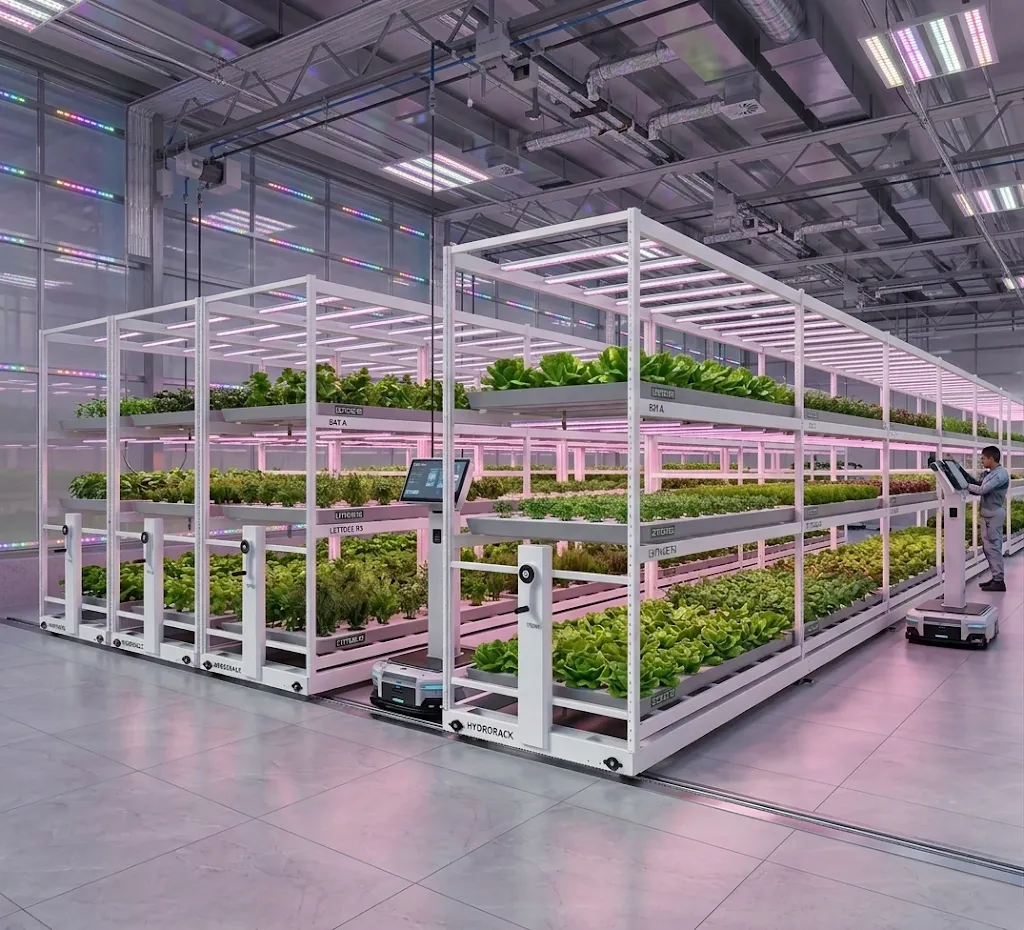
Indoor grow rooms and greenhouses present harsh operating conditions characterized by constant high humidity, irrigation runoff, and frequent chemical sanitation cycles. Different steel compositions offer varying levels of moisture protection and rust resistance:
Stainless Steel & Galvanized Steel (Top Choices for High Humidity)
Galvanized steel and stainless steel provide outstanding resistance against rust, acids, and corrosion caused by persistent moisture and fertilizer solutions.
Stainless steel features a smooth, non-porous surface that inhibits bacterial growth and stands up to aggressive high-pressure washing, making it the gold standard for sterile tissue culture labs and cleanroom facilities.
Powder-Coated Cold-Rolled Steel (Cost-Effective Indoor Solution)
For climate-controlled grow rooms, high-strength cold-rolled steel coated with a durable electrostatic powder-coat or lacquer finish provides reliable load-bearing capacity along with essential moisture protection at an attractive price point.
Facility layout and crop staging dictate the ideal structural design: Open Wire Cultivation Racks
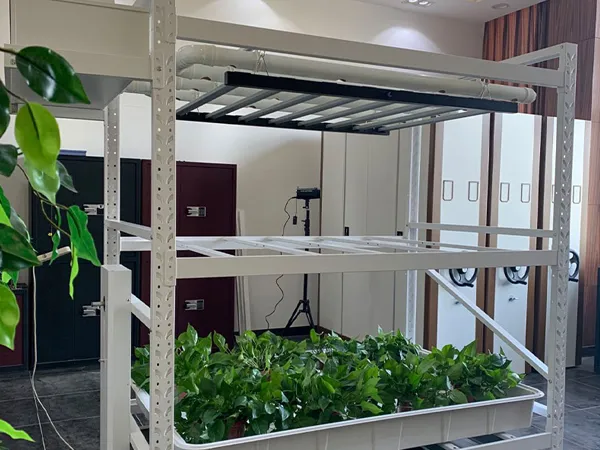
Maximizes Air Circulation & Light Distribution: Open-grid wire construction prevents air stagnation around plant canopies and allows grow light from overhead fixtures to penetrate lower plant levels.
Unobstructed Overhead Sprinklers: Wire grids prevent dust buildup and allow water from overhead irrigation or fire suppression sprinkler systems to pass through freely.
High-Density Mobile Cultivation Systems
Doubles Cultivation Capacity: By mounting growing racks onto track-guided mobile carriages, facilities can eliminate permanent static walkways and open a working aisle only when needed.
Maximized Space Utilization: Compared to fixed shelving, high-density mobile systems can increase growing capacity by up to 100% within the same floor footprint, significantly reducing operating costs per square foot.
At the center of any successful indoor farming or commercial greenhouse operation lies its structural backbone: the cultivation racking system. Far more than mere metal shelving, a modern commercial cultivation rack is a precision-engineered infrastructure platform. It must support thousands of pounds of wet crop weight, integrate seamlessly with complex LED lighting and fertigation plumbing, withstand non-stop high humidity, and comply with strict agricultural biosecurity standards.
To extend the service life of cultivation racks and maintain smooth daily workflows, follow these essential maintenance guidelines:
Regular Cleaning Schedule: In active grow rooms, perform a weekly inspection and sweep of the tracks and carriages to clear away soil, leaves, and organic debris.
In traditional static racking layouts, dedicated walkways or aisles must be left open between every single row of shelves. In a typical indoor farm, these static aisles consume between 40% and 50% of the total room floor area—space that is paying for HVAC, lighting, and rent, but producing zero crops.
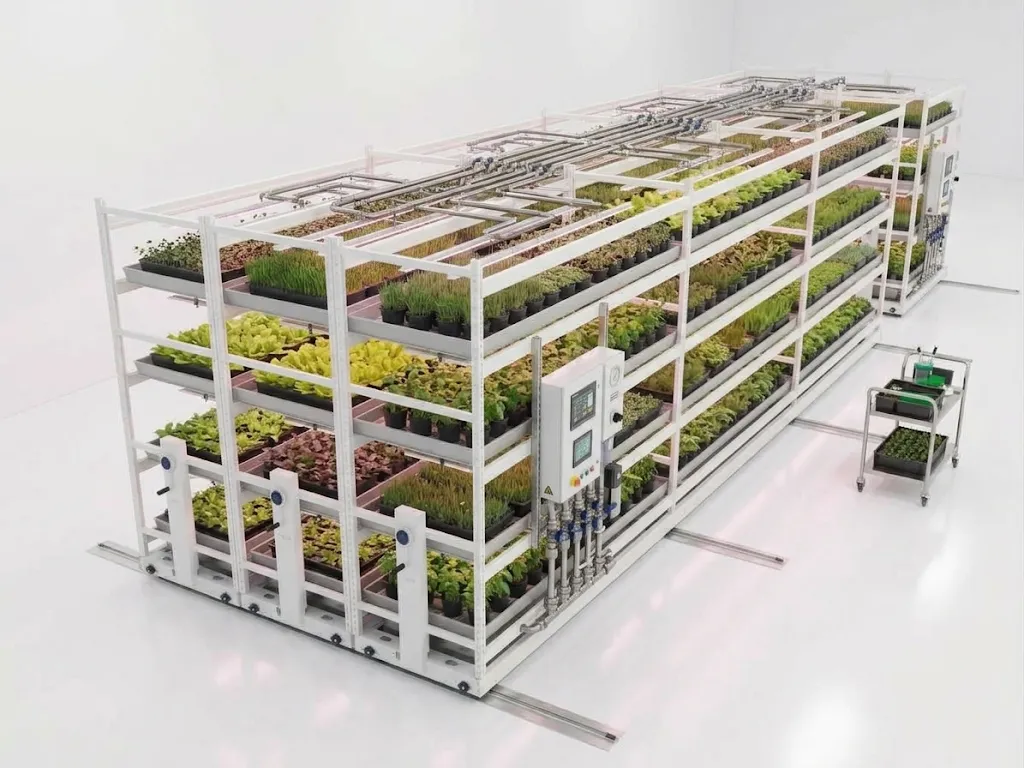
High-density mobile cultivation systems solve this inefficiency by mounting heavy-duty grow rack onto track-guided mobile carriages installed on or embedded into the floor.
Elimination of Static Aisles: Rows are compressed tightly against one another. When workers need to prune, inspect, or harvest crops in a specific row, they open a single moveable aisle using a mechanical-assist rotary hand wheel or an automated electric push-button system.
Canopy Capacity Expansion: By eliminating empty static pathways, mobile racking allows growers to reclaim wasted square footage and increase total cultivation footprint by up to 100% within the exact same building footprint.
Mechanical Drive Efficiency: Modern mobile systems utilize multi-ratio gear reduction systems (such as 4:1 or 10:1 mechanical-assist handles). This gear reduction allows a single operator to move over 10,000 lbs (4,500 kg) of rack and crop weight smoothly with minimal physical effort (requiring less than 1 lb of manual pulling force).
Integrated Safety Mechanisms: High-density mobile systems include built-in safety features, such as mechanical aisle locks, anti-tip track restraints, and seismic floor anchorages, preventing carriage tipping during operation or seismic events.
LED Lighting Integration & Electrical Safety
Multi-tier vertical racks require dedicated mounting brackets for LED light bars.
Investing in commercial cultivation racking is one of the most foundational infrastructure decisions an indoor farm or commercial greenhouse operator will make. By selecting appropriate corrosion-resistant steel substrates, choosing high-density mobile configurations to double canopy capacity, and adhering to dry-track maintenance protocols, commercial growing operations can maximize yield, enhance biosecurity, and secure a resilient operational platform built for long-term profitability.